Judo technique
Gyaku-kesa-gatame
Learn the basics of Gyaku-kesa-gatame and its relationship to Kesa-gatame.
Meaning
Reverse scarf hold
Pronunciation
gyah-koo keh-sah gah-tah-meh
What this technique covers
What the name means
Gyaku-kesa-gatame means Reverse scarf hold in Judo.
Classification
- Type
- Katame-waza: Grappling or control techniques
- Subtype
- Osaekomi-waza: Holding techniques
Key idea
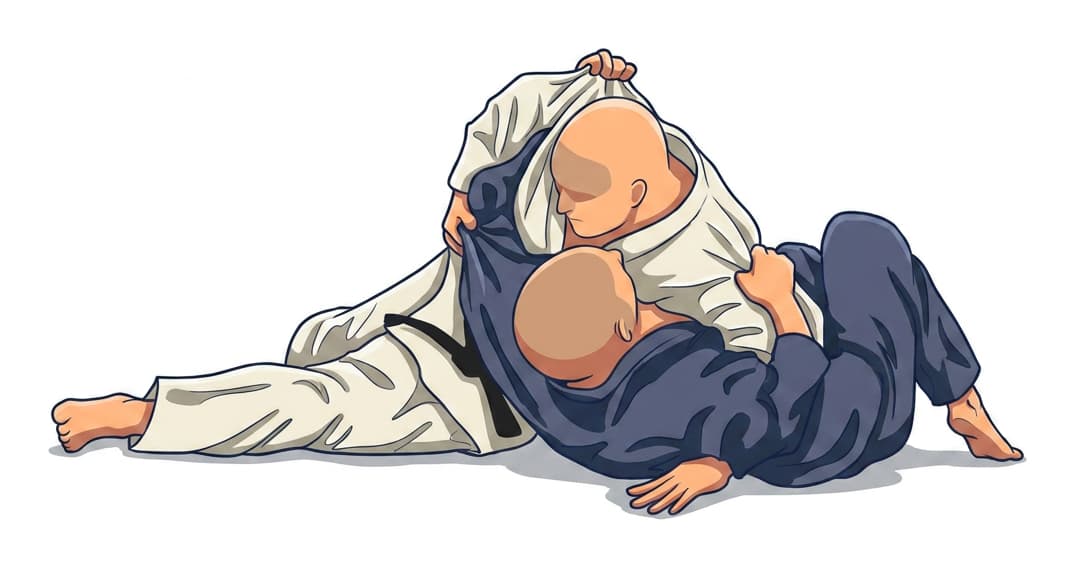
The first idea is control: recognize the hold-down shape, the position of tori and uke, and why this position matters in osaekomi situations.
What to notice in the image
Gyaku-kesa-gatame reverses the scarf-hold angle from the Kesa-gatame family while keeping body connection and upper-body control. Pay special attention to how tori creates control and where uke is positioned in relation to tori's body.
What you will learn
- Recognize Gyaku-kesa-gatame as reverse scarf hold
- Connect it to Kesa-gatame control
- Recognize a basic escape idea
Key terms
- Gyaku-kesa-gatame
Reverse scarf hold
Gyaku-kesa-gatame is a reverse scarf-hold family position related to Kesa-gatame.
- Kesa-gatame
Scarf hold
Kesa-gatame is a common pin. It uses chest pressure and arm control rather than squeezing with strength.
- Osaekomi-waza
Holding techniques
Osaekomi-waza are pins used to control an opponent on their back or side during groundwork.
- Matte
Stop or wait
Matte pauses the action. When you hear it, stop, make space, and wait for the next instruction.
Good to know
- Katame-waza: Grappling or control techniques
- Katame-waza are control techniques, including pins, strangles, and arm locks. This curriculum introduces holding ideas first.
- Osaekomi-waza: Holding techniques
- Osaekomi-waza are pins used to control an opponent on their back or side during groundwork.