Judo technique
Koshi-guruma
Learn the basics of Koshi-guruma and how it relates to O-goshi.
Meaning
Hip wheel
Pronunciation
koh-shee goo-roo-mah
What this technique covers
What the name means
Koshi-guruma means Hip wheel in Judo.
Classification
- Type
- Nage-waza: Throwing techniques
- Subtype
- Koshi-waza: Hip techniques
Key idea
The first idea is recognition: connect the name to the throw shape, the partner roles, and the moment where tori starts the movement.
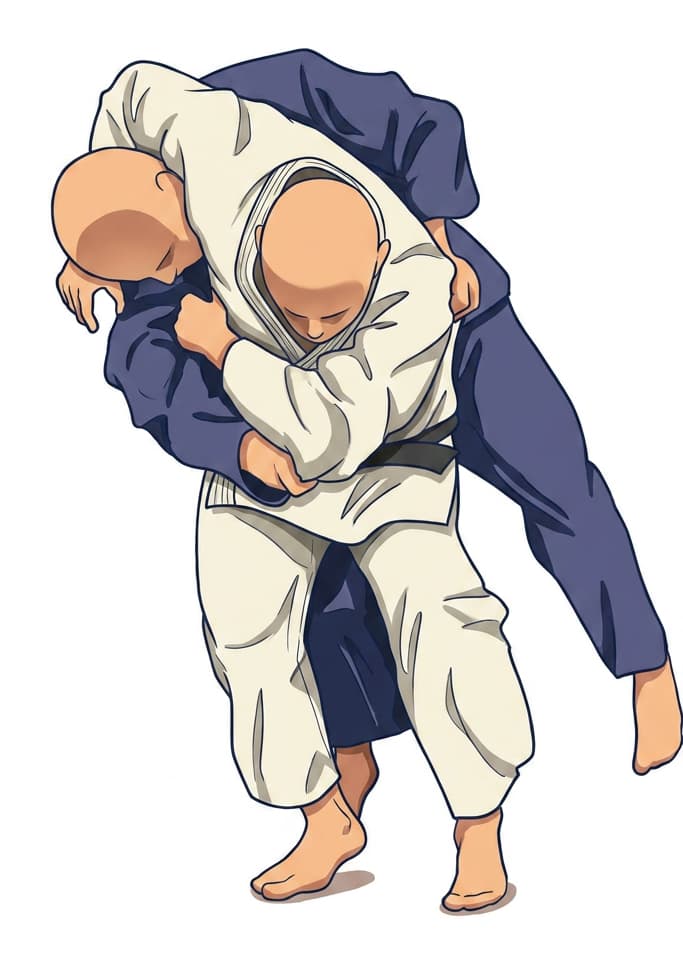
What to notice in the image
In Koshi-guruma, tori turns in, connects the hip line, and rotates uke around the upper-body control like a wheel. Pay special attention to tori's position, uke's direction, and the body line that makes the throwing action visible.
What you will learn
- Recognize the name Koshi-guruma
- Compare Koshi-guruma with O-goshi
- Connect the throw to smaller or bent-forward uke situations
Key terms
- Koshi-guruma
Hip wheel
Koshi-guruma is a turn-in hip throw where tori wheels uke over the hip line with upper-body control.
- O-goshi
Major hip throw
O-goshi is a basic hip throw. The name and broad idea come before technical detail.
- Kuzushi
Breaking balance
Kuzushi is the first big idea in throwing. Before a throw works well, uke's balance must be disturbed.
- Tsukuri
Entry or fitting in
Tsukuri is moving your body into position for the throw after balance has been broken.
Good to know
- Nage-waza: Throwing techniques
- Nage-waza is the family of Judo throws. Throws use timing, balance, and position instead of raw strength.
- Koshi-waza: Hip techniques
- Koshi-waza are throwing techniques where the hip is central to the throwing action.