Judo technique
Ippon-seoi-nage
Learn the basics of Ippon-seoi-nage and its arm position.
Meaning
One-arm shoulder throw
Pronunciation
ee-pohn seh-oh-ee nah-geh
What this technique covers
What the name means
Ippon-seoi-nage means One-arm shoulder throw in Judo.
Classification
Key idea
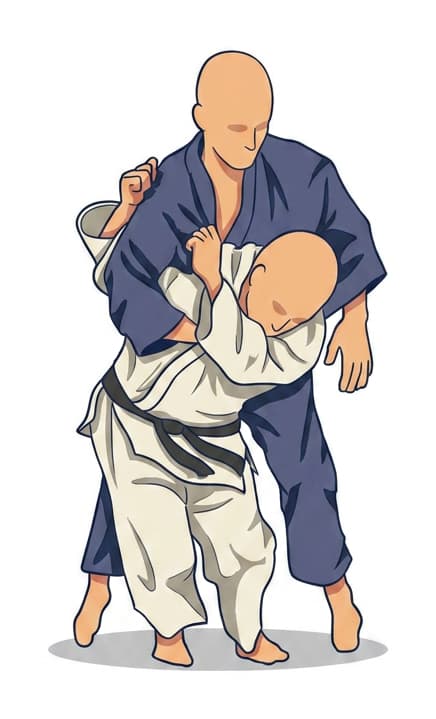
The first idea is recognition: connect the name to the throw shape, the partner roles, and the moment where tori starts the movement.
What to notice in the image
In Ippon-seoi-nage, tori controls one arm, turns in under uke's upper body, and keeps the arm connected through the throw. Pay special attention to tori's position, uke's direction, and the body line that makes the throwing action visible.
What you will learn
- Recognize the name Ippon-seoi-nage
- Understand the one-arm shoulder-throw idea
- Connect the throw to larger uke situations
Key terms
- Ippon-seoi-nage
One-arm shoulder throw
Ippon-seoi-nage is a shoulder throw that controls one of uke's arms while tori turns in under the upper body.
- Kuzushi
Breaking balance
Kuzushi is the first big idea in throwing. Before a throw works well, uke's balance must be disturbed.
- Tsukuri
Entry or fitting in
Tsukuri is moving your body into position for the throw after balance has been broken.
Good to know
- Nage-waza: Throwing techniques
- Nage-waza is the family of Judo throws. Throws use timing, balance, and position instead of raw strength.
- Te-waza: Hand techniques
- Te-waza are throwing techniques where hand and arm action are central to the throw.